
The Eternal Presence: Understanding God's Name in Exodus 3
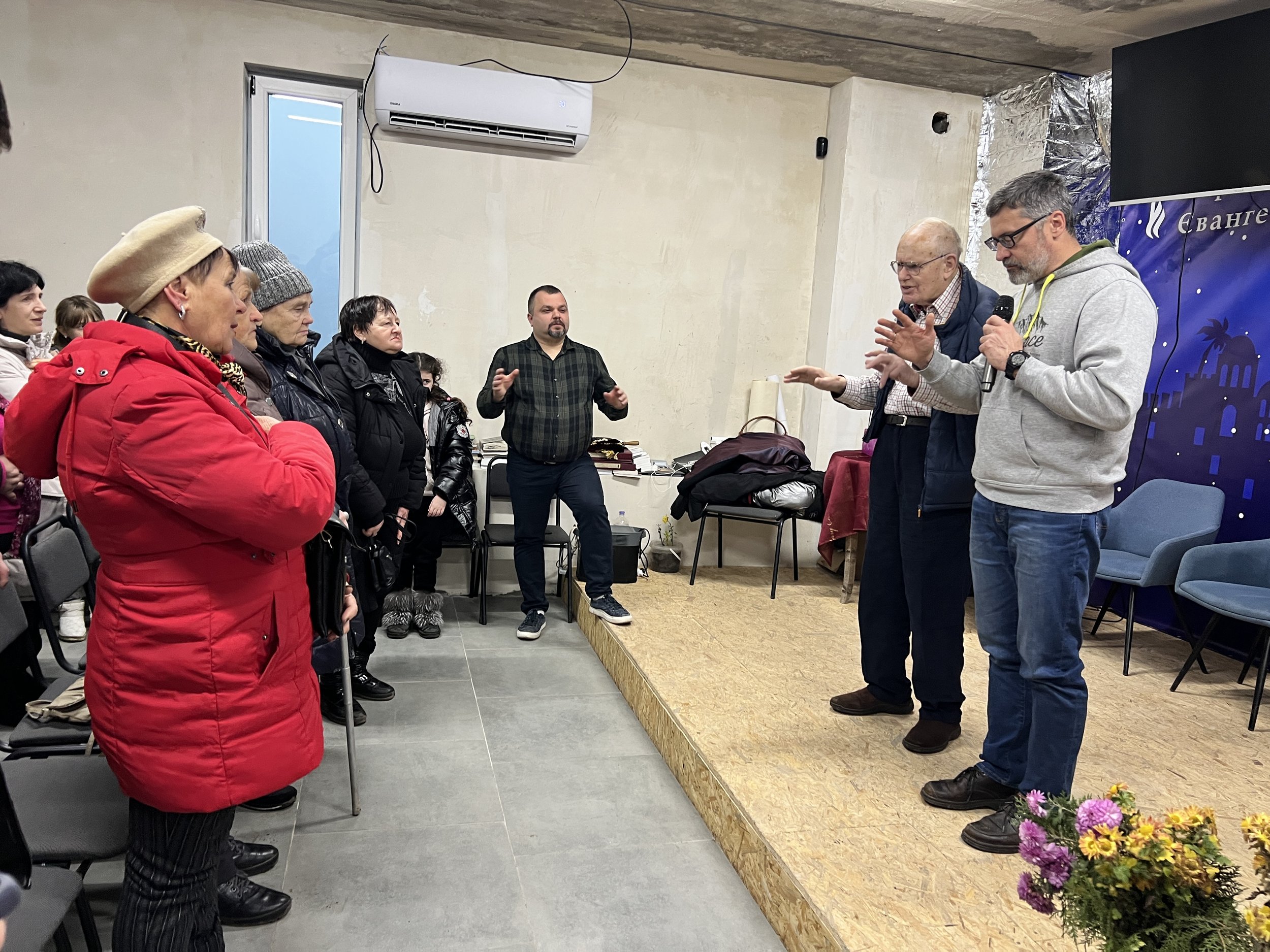
God says In Exodus 3, “I have seen the affliction of My people who are in Egypt, and I have heard their cry because of their taskmasters, and I know their sorrows, and for this reason I am come down to deliver them.” (I preach on this verse in Ukraine!) The children of Israel are in affliction, they’re slaves in the land of Egypt. In the English, God doesn’t say, “I WILL come down,” but “I AM (already) come down!” He’s already here. He is the God of the past, the present and the future! His promise to the predecessors was to deliver Israel, to take them into Canaan and give them their own territory. (One of the miracles of the Bible is that, today, after more than 2000 years, Israel is once again a sovereign nation.)
Moses responds, “When I come to the children of Israel and tell them that the God of their fathers has sent me, they will want to know, what is Your Name? What shall I say? Who ARE You?” God replies, “I AM that I AM (אני זה שאני, eh yeh a sher eh yeh)!” I AM THAT I AM is the English translation, and I’ve always been intrigued by it. I AM is EXISTENCE. God always has been, in the past, and always will be – in the future! Not created. He EXISTED before the very beginning of time. We cannot imagine it, but God has always been and always will be! He says to Moses, “Tell them, I AM ( אני, eh yeh) has sent you.”
God’s Name in Hebrew can equally be translated as ‘I WILL BE WHAT I WILL BE’, as Biblical Hebrew has no future tense, instead a continuous present. I am whoever I want to be, whatever I want to be, whenever I want to be. Whatever I want and say, I do. I am EVERYTHING. I am EVERYWHERE. Hence the fact that in Exodus 3, God is in the burning bush! And speaks from the fire! But to Elijah God does not speak from the wind, earthquake or fire – but in a still small voice.
When God is speaking to Moses, He’s saying, “I existed BEFORE your fathers, BEFORE Abraham, Isaac and Jacob. I existed before everything, and I AM the Creator of everything. This is my Name forever!” He’s making known His Eternal Presence! Without beginning, without end. He has and is ALL Power, ALL Authority – that’s who we worship!
1. The Proximity of God: "I Am Come Down"
When God addresses the affliction of His people in Egypt, the phrasing in Exodus 3:8 is profound. Rather than a future promise ("I will come"), the text conveys a present reality: "I am come down."
Context: The Israelites were slaves under Egyptian taskmasters.
Significance: This demonstrates that God is not a distant observer but an active participant in human history—the God of the past, present, and future.
Modern Parallel: The restoration of Israel as a sovereign nation after 2,000 years stands as a modern testament to these ancient promises of territory and deliverance.
2. Deciphering the Divine Name: Ehyeh Asher Ehyeh
When Moses asks for God's name to present to the children of Israel, God replies: "I AM THAT I AM" (אֶהְיֶה אֲשֶׁר אֶהְיֶה).
3. The Continuous Present of Biblical Hebrew
A fascinating linguistic aspect of the Divine Name is that Biblical Hebrew lacks a traditional future tense, utilising a continuous present instead. This implies:
Sovereignty: God is whoever He wants to be, whenever He wants to be.
Omnipresence: He is in the burning bush to Moses, yet appears as a "still small voice" to Elijah. He adapts His presence to the need of the moment.
4. The Eternal Creator
By identifying as the God of Abraham, Isaac, and Jacob, God establishes His Eternal Presence. He existed before time and the patriarchs. He claims all power and all authority as the Creator of everything.
Key Takeaway: To worship the "I AM" is to worship a God who is not bound by time, who hears the cry of the afflicted, and whose authority remains absolute forever.
Key Principle: To worship the "I AM" is to worship a God who is not bound by time, who hears the cry of the afflicted, and whose authority remains absolute forever.